RSS Feed
Subscribe to our RSS FeedBlog Categories
- Categories
- Garden Design (71)
- Garden Landscaping (57)
- Garden Style (30)
- Natural Stone Paving (26)
- Garden Patios (26)
- Granite Driveways (22)
- Garden Colour (22)
- Driveway Design (20)
- Sandstone Patios (20)
- Sandstone Paving (19)
- General Garden Advice (18)
- Gardening in Small Spaces (16)
- Garden Accessories (15)
- Driveways (15)
- Patio Design (15)
- Stainless Steel Water Features (14)
- Raised Planting Beds (13)
- Garden Fencing (13)
- Grow Your Own (12)
- "Shoot the Breeze" (12)
- Garden Innovation (11)
- Exhibitions (11)
- Patio Construction (11)
- Garden Furniture (10)
- Roll Turf Lawns (10)
- Grow It Yourself (10)
- Outdoor Living (10)
- Connemara (9)
- Planting Advice (9)
- Water Features (9)
- Ireland (9)
- Timber Cladding (9)
- Garden Planters (8)
- Victorian Summerhouses (8)
- Gardening General (8)
- Granite Patio (7)
- Garden Tips (7)
- Raised Planter Beds (7)
- Oughterard (6)
- GARDEN LIGHTING (6)
- Garden Lawns (6)
- Garden Sculpture (5)
- Fruit & Vegetable Gardening (5)
- GARDENSTUDIO (5)
- Family Garden Design (5)
Unexpected delight in a rugged environment


Connemara famous for it’s rugged natural beauty is a place where the local conditions can and do change very quickly. On bright sunny days, the relative raw unspoilt natural environment can be simply breathtaking, but there are also reminders of difficult and harsh conditions. Setting out from the Glann Road in Oughterard and heading westward along the Great Lough Corrib, one passes through a beautiful wooded area. Reminiscent of scenes by Tolkien, the sunrays penetrate deeply through the tree canopy and shafts of light touch the lush smooth grassy covering of the forest floor.
Before reaching the boarded walk of the Western Way which leads to Maam, there is plenty of rugged natural beauty to be admired along the route. Craggy outcrops, open expanses of water, hills and mountains, faint sounds of birds. There is little reminder of human present, apart from an occasional walker, here one is more likely to encounter aimless rambling sheep than humans. The sound of winds blowing across the lake or through the often leaning trees is more likely to drown the sound of distant birdsound. Concentration is required in order to hear muffled distant birdsong.
Today lucky with the weather, the sun was high and bright and with a brisk walking pace one did not take notice of the cooling easterly winds blowing across the lake. Finding a suitable place to rest amongst the random rock was not difficult, nestled beside a large boulder provided great shelter from the wind and a natural suntrap from which to admire the panoramic beauty. The combination of stunning vistas and natural silence is irresistable and soon the mind and body drift into a meditative trance. Coming here one is less but better for the unexpected delight of this beautiful but rugged environment.


Stainless Steel Water Feature to brighten a corner

TITAN 3 Column Stainless Steel Water Feature in Raised Planter Bed
A relatively simple, easy to instal and no mess way to brighten any corner is to instal a water feature in a raised bed. A raised bed does not require breaking of the existing ground surface or paving. In this instance pressure treated pine sleepers were used to construct the raised bed, scale was carefully considered to fill the available space as well as provide space for planting. The elegant 3 Column Stainless Steel Water Feature makes good use of the vertical space and provides an eyecatching display with the soothing sound effects of trickling water.
A nice surprise to greet the schoolchildren when they return from their summer break.

An attractive and soothing feature for any space
Landscaping Ideas – Planting


Do great plants make great gardens? Most definitely so long as all of the other requirements are satisfied including an appealing design based on a practical planting scheme, good ground preparation and careful attention to ensure that all aspects of the site are carefully considered.
There is no doubt that the planting phase of a new garden is very exciting and certainly represents one of the most fulfilling aspects of the landscaping inputs. For many, planting defines what a garden is and certainly most would agree that the planting will significantly influence how the garden is perceived. Practical plant selections and interesting compsoitions are key.
The planting phase does often require considerable gritty effort and a disciplined approach helps, starting with the removal of excess waste/debris to preparing the planting pits. As the sun shines, the exciting prospects of an emerging new garden is within grasp.


Driveway Stone selection

There are many reasons why natural stone and in particular Granite is the superior choice when it comes to selecting the surface finish for a new or replacement Driveway. Durable and longlasting surface, significantly reduced maintenance and no weeding, no colour fading, much more appealing aesthetics etc etc After replacing several Driveways constructed from various materials including cobblelock pavers, concrete and tarmac, one is constantly reminded how important not just the design but especially quality of finish influences the longterm viability of the Driveway. A recent project illustrates this latter point very clearly. As the photographs of the old existing Cobblelock driveway illustrate, poor attention to levels, jointing, and fitting are all too evident. Poor ground preparation is most likely the reason for the disintegration of the sub-base which had caused several pavers to simply open up and yield to pressure of car parking. This not only leads to unsightly gaps, but areas in which weeds flourish. A more serious consequence is the potential for widening joints is the risk to injure pedestrians.
Apart from the aesthetics, the selection of suitable surface for a Driveway demands careful consideration. Similarly the selection of a suitable contractor or landscaper to instal the Driveway also demands careful consideration. Understandably much of the client’s initial focus might be over influenced by the installation costs, but there is nothing more expensive than making the wrong choice of contractor and/or material. One would expevct a new Driveway to last a lifetime (ie > 25 years), why is it that many require replacement within 5 – 10 years? Inadequate ground preparation and poor workmanship which have been compromised by unrealistic project budgets. Spending more does not necessarily mean one will get more, but spending wisely after careful research and selection will more likely result in achieving the desired results. Anyone can in theory be cheap, it isn’t difficult, but doing things right first time and with pride requires a more professional approach. Value is not only measured by the cost on the day of installation but more importantly over a lifetime of use.
When it comes to the selection of Driveway stone, Granite is the natural choice.


Driveway paving with Granite

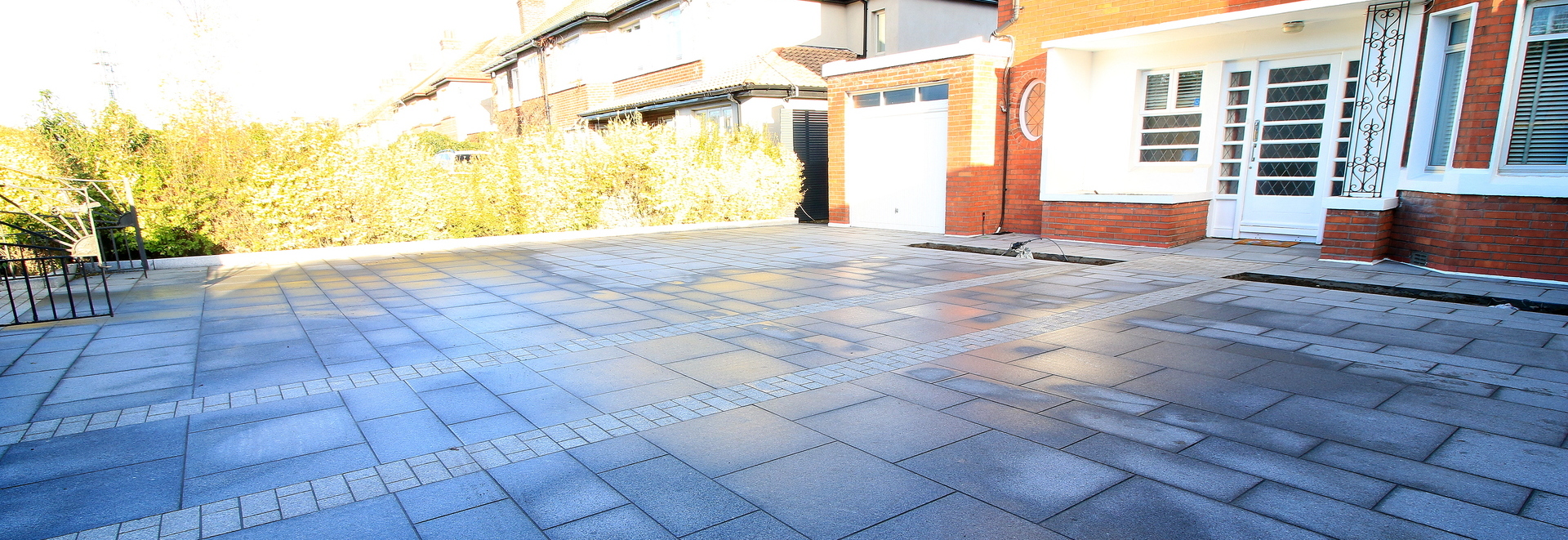
Granite Paving and Granite Setts make an ideal Driveway finish
Natural Granite (Paving and Setts) as the preferred choice for Homeowners to provide a beautiful, hardwearing and long lasting finish for Driveways continues to grow. Despite costing more than other alternatives, Granite represents a superior finish and ultimately better investment value. Even without any planting areas, granite is appealing and is especially attractive as the ideal wall capping for the new brick walls.

Best Paving for Driveways: Granite Setts and Granite Paving
Why PEAT?
Why in an age when we are supposed to be going green, are we still damaging our countryside and mining for peat? Why given peat is not a clean fuel, are we continuing to burn peat? Why when climate change is supposedly high on the environmental agenda, are we continuing to commercially extract peat and destroy our native Bogland habitats? Why?
Small Garden Design Ideas
![2-using-design-to-enhance-the-aesthetics-of-the-side-entrance-470x352[1]](http://www.owenchubblandscapers.com/news/wp-content/uploads/2010/08/2-using-design-to-enhance-the-aesthetics-of-the-side-entrance-470x3521.jpg)
Some design tips for getting the most from all that important area in which to relax:
Colour: although many if not most prefer to have lots of colour in the garden, why not consider a more relaxing and calming atmosphere? Green with its wide range of hues is the ideal calming colour. For accent colour try planting bold colours in containers/pots.
Layout: although curves and/or linear layouts are popular, the curves are proabably despite being lesss space efficient provide a more natural view than more the sometimes more defined layout involving straight lines and angles . If in doubt also consider a combination of both, ie, curvo-linear.
![p6110015-470x352[1]](http://www.owenchubblandscapers.com/news/wp-content/uploads/2010/08/p6110015-470x3521.jpg)
Compartments: some might prefer the panoramic view of being able to see everything at once in the garden, however there is more to be gained by creating compartments. Try creating layouts which offer scope for distinctive looks/compartments, just like a house has rooms with various rooms each with a distinct look and function, this methodology can also be applied to the garden.
Fencing: in nearly all cases the primary role of fencing is to provide a secure boundary, beyond this, fencing also has great potential to provide a very useful backdrop to the planted areas. Choice of finish is important but select a colour shades (dark green, ebony etc) which will be neutral and therefore highlight plant forms and colour.

Synthetic Grass – a real fit for purpose

For many garden enthusiasts the centrepiece of a beautiful garden is of course a lush green manicured lawn. Any thoughts of replacing a natural lawn with a synthetic or artificial grass would surely be greeted with cynicism and derision. However there are circumstances where the synthetic lawn is perhaps the only practical alternative to a real lawn. Such circumstances include persistently damp sites where the owners find it impossible to retain any reasonable grass surface or lawn. In other cases the garden space may be too small and the presence of pets (usually dogs) with constant wear and tear, can severely impact the quality of the lawn area. This usually results in permanent bare patches or very weak and poor grass. This situation continues to deteriorate especially during prolonged damp spells and throughout the cold and wet winter months, a messy muddy surface is inevitable. Matters go from bad to worse when the mud is transferred indoors by pets and/or young children. In real severe cases the homeowners are forced to make the ‘garden’ off limits. In such circumstances, synthetic grass provides a purpose fit durable all weather surface.

Here is a real example in which the owners had tried in vain to retain a lawn and despite replacing the lawn on a number of occasions. A typical new urban garden space is modest in size, the ground conditions generally poor which contributed to the poor drainage leading to weakened grass etc. The owners wanted to enjoy the garden more and love their pet dog. Having tried repeatedly and failed, they decided to remove the lawn, but with what do you replace it? Options included paving the whole area, but paving wall to wall can look very harsh and rarely works. A combination of paving with pebbles was not considered very practical especially when it comes to cleaning up after the dog. Having considered a number of options, it was decided to replace the lawn with synthetic grass and also include some Raised Planting Beds to provide better growing conditions as well as some protection for the plants from the pet dog.


The ground preparation for installing a synthetic lawn is broadly similar to installing a paved area, ie, remove lawn, excavate soil area, the compacted hardcore is blinded with compacted sand. This provides a secure base for the synthetic surface which is secured by fixing to a pressure treated perimeter timber frame.


Synthetic grass surfaces have distinct advantages over natural equivalents including low maintenance all weather area, no cutting or trimming, even cleaning is easy. Quality synthetics are available in a range of grades to suit individual preferences. Most are UV stable, so will not fade and pet fouling will not stain and is easily removed. Synthetic grass provides a durable child and pet friendly surface and is ideal for situations where owners require a real alternative for garden spaces where natural lawn is not practical.
LED garden lights – nice and bright

LED garden lights offer an easy and cost effective means to add impressive drama into your garden. LED lights are an ideal way to light up your favourite plants or garden feature. There are several advantages to using LED garden lights including long life (50,00-60,000+ hours), low energy and therefore low running cost (the lights featured in these photos are rated 3W). Other advantages include no flicker, no heat generated and easily recycled. Good for your garden, good for your pocket and certainly good for the environment. Surely an all round win?
The lighting featured here is mains operated (no transformer) GU 10 3W Garden Spike Spot which can be used as an Uplighter (under the Bamboo planting) or as a Targeted light (illuminate the Water Feature).


For Peat’s sake, let’s put an end to this
This topic is one which is close to my landscaping heart and I have mentioned it previously. I am of course referring to the continued widespread use of Peat as a soil improver/conditioner. Ireland is one of a few European producers continuing to extract peat from its native Bogland areas. Almost a million tonnes are extracted annually and much of it is exported. This may be endorsed and applauded by some as commercial success, but at what cost to our native bogland habitats? Why on one hand does the Irish Government invest considerable resources to make the Irish public more aware of important environmental matters, like recycling, waste management, carbon footprint etc etc when they own and operate one of Europe’s leading peat mining companies much of which finds its way into export markets? The mining of peat for gardening purposes is irresponsible, unsustainable and should be stopped.
The case for banning peat from soil conditioning products is very clear. On a macro level, all gardening enthusiasts should be more selective when deciding which products to purchase. Products containing any peat should be avoided. When Peat is sourced from Boglands, the capacity of the Bogs to store carbon is greatly reduced and the more the Bogs are mined, the more they will dry out thus releasing carbon into the atmosphere. Another consequence of mining peat is the destruction of native wildlife habitats. Transporting peat products overseas presumably causes more impact on the environment and increases carbon emmissions? How green is that?
Gardeners wishing to use peat free compost products, should also check packaging labels very carefully to ensure the product is in fact peat-free. Apparently many multi-purpose compost products on sale can contain over 70% peat.
The benefits of using peat-free soil conditioning products cannot be ignored. First and foremost we should all be doing more to protect unique habitats and make more responsibile decisions that protect wildlife from unnecessary threats. Peat-free soil conditioners make excellent soil improvers and conditioners and any organic alternative to peat, which contains few if any nutrients will provide much better results in the garden.